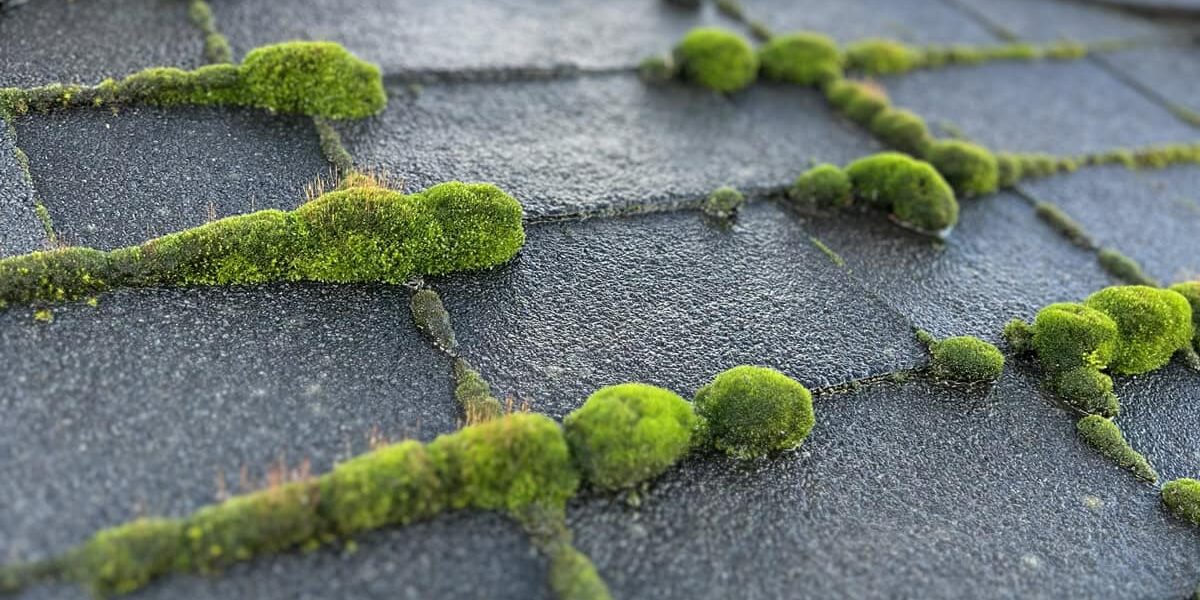
Short answer: roof moss can be cosmetic at first, but thicker growth deserves attention because it can hold debris and moisture, crowd shingle edges, interfere with drainage, and hide the roof surface. Moss does not automatically mean the roof is ruined.
The practical response depends on how much growth is present, where it is located, what roofing material is underneath, and the condition of the surrounding roof.
When moss may be mostly a maintenance concern
Light or isolated growth on otherwise serviceable roofing may call for monitoring, careful cleaning, and a plan to address the conditions helping it return. An assessment should still consider the roof’s age, wear, previous repairs, and drainage.
When moss deserves closer attention
- Growth is thick, widespread, or returning quickly.
- Moss is established along shingle edges or between roofing components.
- Needles, leaves, or moss are collecting in valleys and around roof features.
- Gutters overflow or drainage is restricted.
- The roof also has loose, worn, brittle, or damaged roofing.
- A leak, interior stain, or damaged flashing is already present.
Those signs do not prove that moss caused every concern. They do mean the roof should be evaluated as a system rather than treated as a cosmetic surface.
What moss can hide
Heavy buildup can make it harder to see worn shingles, exposed fasteners, damaged flashing, deteriorated sealant, or debris blocking drainage paths. Cleaning may reveal a repair concern; it does not create the repair or solve it automatically.
Cleaning is maintenance, not roof restoration
A suitable cleaning scope can remove buildup and give the roofer a clearer view of the surface. It cannot reverse normal aging, replace missing material, repair flashing, or correct concealed damage. If the roof is fragile or significantly worn, cleaning may not be the sensible first step.
Moss Boss does not pressure wash asphalt shingles. The Asphalt Roofing Manufacturers Association cautions that pressure washing can damage the roof surface. The method should fit the roofing material and condition.
Read ARMA’s asphalt-roof maintenance guidance.
Why moss grows more quickly on some roofs
Shade, slow-drying slopes, tree debris, roof shape, drainage, and previous growth all change the picture. Read why moss grows on Oregon roofs for a closer look at those conditions.
What to do if you see moss
- Take photos from the ground if you can do so safely.
- Note whether gutters overflow or debris is collecting nearby.
- Mention any leak, interior stain, storm damage, or known repair.
- Ask whether the roof is a suitable cleaning candidate.
- Confirm the written scope, including gutters, treatment, anchors, and exclusions.
Stay off wet, mossy, steep, or unfamiliar roofing. A roof surface can be hazardous even when it looks reachable.
Cleaning, inspection, or repair?
For buildup on serviceable roofing, explore roof cleaning and moss removal. If you are not sure what the roof needs, start with a free RoofCare Check. For active leaks or visible damage, review roof repair options or call and describe what is happening.
You can also send us a few details or photos and we’ll help identify the next sensible step.
Last reviewed: September 20, 2026.