Your roof is one of the hardest-working parts of an Oregon home. Through long stretches of rain, shaded drying conditions, wind, falling debris, and moss-friendly weather, it quietly protects everything beneath it.
This guide is designed to make roof care easier to understand. It explains how an Oregon roof works, what changes its maintenance needs, which warning signs deserve attention, and how to tell whether the next sensible step is cleaning, an inspection, a repair, monitoring, or replacement planning. You do not need to become a roofer. You just need enough clear information to ask good questions and make a confident decision about your home.
Oregon roofs work through months of rain, shaded drying conditions, tree debris, moss pressure, wind, and changing temperatures. Good roof care is not about assuming the worst. It is about noticing what changed, understanding what matters, and choosing a proportional response.
Start with the question you are trying to answer
- I see moss or debris: start with cleaning, moss, and drainage.
- I found a stain or active leak: go to repairs and leak diagnosis.
- I do not know the roof’s condition: read inspections and maintenance.
- I am comparing repairs with replacement: see repair or replace.
- I am planning a new roof: review replacement, materials, and warranties.
- I am choosing a contractor: use the Oregon contractor checklist.
What makes roof care different in Oregon?
In Salem and throughout the Willamette Valley, the issue is rarely rain by itself. The bigger question is how long portions of the roof stay damp and whether water and debris can leave the roof as intended.
- Shade: north-facing slopes and areas beneath trees may dry more slowly.
- Leaves and fir needles: debris can hold moisture, collect behind penetrations, and interfere with drainage.
- Moss history: recurring growth usually tells you something about moisture, shade, or debris conditions on that roof plane.
- Gutters and downspouts: a roof and gutter system work together. Overflow, clogs, or poor discharge can move water where you do not want it.
- Wind and branches: seasonal weather can expose loose materials, damaged flashing, or impact concerns.
- Roof shape and access: valleys, transitions, low-slope areas, height, pitch, skylights, and solar equipment all change inspection and service planning.
This is why two homes on the same street may need different maintenance. One may have an open, sunny roof with good drainage. The other may sit beneath mature trees with shaded valleys and a history of moss. A calendar alone cannot describe both roofs. Our fall roof checklist for Willamette Valley homes helps you organize seasonal observations.
The roof is a system, not just shingles
The visible roof covering gets most of the attention, but it is only one part of the water-shedding system. Understanding the major parts makes estimates, inspection findings, and repair recommendations much easier to follow.
Roof covering
Asphalt shingles, metal panels, and low-slope membranes shed weather in different ways. The material, installation details, slope, age, exposure, and maintenance history all affect what can be repaired and what should be monitored.
Decking and underlayment
Decking is the structural surface beneath the roofing. Underlayment adds a secondary layer beneath the roof covering. Their condition may be partly hidden until materials are removed, which is why a replacement proposal should explain how unexpected decking work will be handled.
Flashing and penetrations
Flashing helps move water around walls, chimneys, valleys, skylights, vents, and other transitions. Small details here can matter more than a large open field of shingles. Sealant may be part of a repair, but it is not a substitute for correctly designed and installed flashing.
Ventilation
Roof and attic ventilation should be evaluated as a complete intake-and-exhaust system. Adding a vent without understanding the existing airflow can miss the underlying problem. Ventilation decisions should account for the roof design, attic layout, insulation, and current code and manufacturer requirements.
Gutters and drainage
Gutters collect roof runoff and direct it toward downspouts. Their size, slope, outlets, guards, debris load, and discharge locations all influence performance. If water is overflowing, the answer may be cleaning, repair, more capacity, or a change in drainage, not automatically complete replacement. Read our 5-inch vs. 6-inch gutter comparison to understand how size and downspout layout affect the choice.
If a term is unfamiliar, use our roofing glossary for homeowners as a quick reference.
Cleaning, moss, and drainage
Short answer: moss deserves attention, but visible moss does not automatically mean the roof is ruined. The amount and thickness of growth, the roofing material, shingle condition, drainage, roof access, and any existing damage determine the responsible next step.

The Asphalt Roofing Manufacturers Association explains that moss favors moist, shaded roof planes and that heavier buildup can lift shingle edges or affect water movement. ARMA also warns against pressure washing asphalt shingles because it can damage the roof surface. Read ARMA’s moss and asphalt-roof guidance.
Cleaning frequency should be condition-based. A newer, open roof without active growth may need less attention than an older roof beneath trees with recurring debris and shaded slopes. Look at the roof’s condition, drainage, moss history, weather exposure, and any concern being monitored instead of relying on a fixed interval.
Go deeper:
- Why moss grows on Oregon roofs
- Is roof moss cosmetic or damaging?
- How often should you clean an Oregon roof?
- What to expect from the roof-cleaning process
- What affects roof-cleaning cost in Salem?
- Roof-cleaning before-and-after projects
For service scope and options, visit roof cleaning and moss removal in Salem.
Inspections and preventative maintenance
Short answer: there is no single inspection schedule that fits every Oregon roof. A newer roof without concerns generally needs less frequent attention. An older roof, a roof with a monitored repair, or one exposed to heavy debris, moss, drainage problems, or a significant storm may deserve a closer look sooner.
A useful roof assessment looks beyond whether shingles are present. Depending on the roof and the reason for the visit, it may consider:
- roof-covering wear, damage, alignment, and attachment concerns
- flashing at walls, valleys, vents, chimneys, skylights, and transitions
- moss, debris, staining, and drainage patterns
- gutters, downspouts, and visible discharge concerns
- visible decking or structural concerns where safely observable
- interior or attic evidence when included and accessible
- the difference between routine maintenance, a repair, monitoring, and replacement planning
Moss Boss offers free basic or verbal roof assessments that may include photos and a brief description of findings. A comprehensive professional written report for litigation, insurance, claims, or HOA use starts at $350; the final price depends on scope and complexity.
Read how roof condition changes inspection frequency, or see what is included with a Moss Boss roof assessment in Salem.
Homeowners can help by looking from the ground for obvious changes after severe weather, keeping records and photos, and noting when a stain first appeared. Avoid walking on the roof. Wet surfaces, pitch, weak decking, and fall exposure make roof access a job for properly equipped professionals. Oregon OSHA maintains a dedicated roofing safety resource.
Repairs and leak diagnosis
Short answer: an interior water stain tells you where water became visible, not necessarily where it entered the roof. Water can travel along decking, framing, fasteners, insulation, or other materials before it reaches the ceiling.
Common repair areas include flashing transitions, pipe boots, vents, skylights, valleys, damaged shingles, exposed fasteners, and drainage-related details. A good diagnosis should connect the visible symptom to a plausible entry path and explain what the proposed repair can and cannot accomplish. Learn why a ceiling stain may appear away from the roof leak and which clues help trace the source.
- Active leak: protect the interior if it is safe, document the condition, and call or text a roofer to discuss immediate next steps.
- Old stain with no current moisture: record the location and conditions, then arrange an assessment rather than assuming the leak is still active.
- Storm-related concern: photograph what you can from the ground and avoid climbing onto a wet or damaged roof.
- Small visible defect: have the surrounding system checked. The obvious item may not be the only contributor.
Start with what to do when your roof is leaking, then review how to compare repair and replacement. For service details, visit roof repair in Salem.
When is repair still a responsible option?
Repair may make sense when the problem is localized, the surrounding roof remains serviceable, compatible materials and a workable repair method are available, and the repair has a reasonable chance of addressing the cause. Replacement becomes more likely when deterioration is widespread, leaks or failures recur across different areas, the roof system is no longer reliably repairable, or the cost and limitations of repeated repairs no longer make sense.
Age is context, not a diagnosis. Two roofs installed in the same year can age differently because of materials, installation, ventilation, exposure, maintenance, storm history, and prior repairs. A decision should be based on the roof’s current condition and the homeowner’s goals, not one lifespan number.
A balanced recommendation may be repair now, monitor a known condition, complete maintenance first, or begin planning for replacement. The right answer is the one supported by what the roof is actually showing. For recurring care, explore the RoofGuard maintenance program. Our permanent roof anchor guide explains one part of planning professional access.
Roof replacement, materials, and warranties
A roof replacement is not just a shingle purchase. The proposal should explain the complete system: removal, decking review, underlayment, flashing, ventilation, penetrations, roof covering, cleanup, documentation, and how unexpected conditions will be handled.
A typical replacement sequence
- Confirm the scope, materials, access, protection plan, and schedule.
- Remove the existing roofing included in the proposal.
- Inspect the exposed deck and document conditions.
- Complete approved decking or structural work.
- Install the specified underlayment, flashing, ventilation components, and roof covering.
- Clean the site, review the work, and provide final documentation.
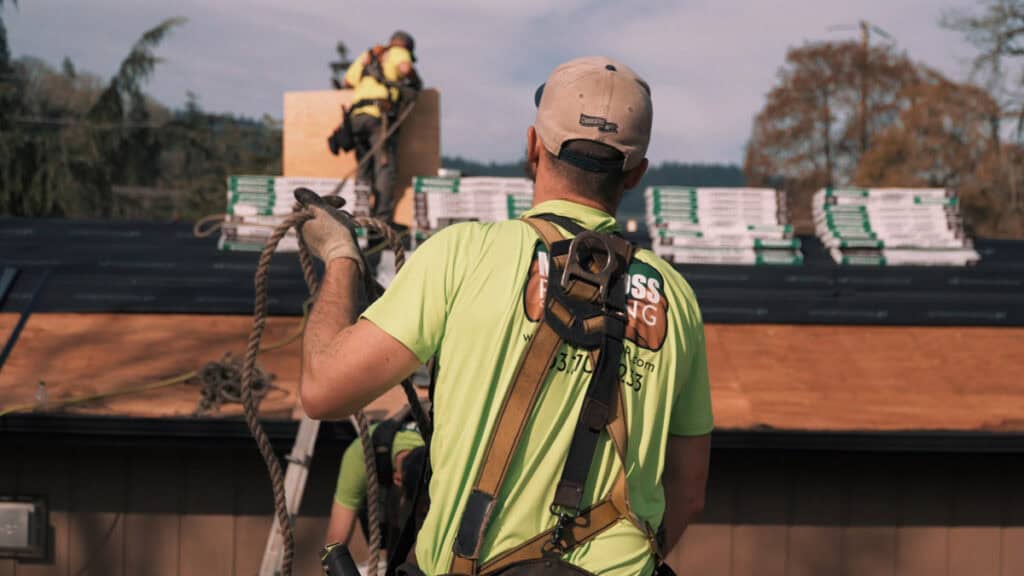
Weather matters, but Oregon roofing is not limited to one perfect season. The crew needs a safe plan for the forecast, materials, exposed work, and changing conditions. Read our roof-replacement process example for a closer look at a completed project. See how we plan for rain during roof replacement, including protection and schedule updates.
Material decisions
Homeowners commonly compare architectural asphalt shingles, impact-rated options, designer shingles, and standing-seam metal. The best fit depends on the roof design, budget, appearance, exposure, installation system, and long-term plans for the home. Product ratings and warranty eligibility should be confirmed with the current manufacturer documents and the written proposal. To compare products and colors on actual homes, browse our completed roofing projects in Salem and the Willamette Valley.
Understand the two warranty layers
A contractor’s labor or workmanship warranty is different from a manufacturer’s material warranty. Coverage, exclusions, registration requirements, transferability, and claim procedures can differ. Read both documents and make sure the proposal identifies the products and system being installed.
Moss Boss labor coverage is tied to the selected Malarkey shingle system: Highlander AR includes 5 years, Vista AR includes 7 years, and Legacy includes 10 years. The signed project contract and current warranty document control, and manufacturer coverage remains separate.
For more planning help, see seven signs a roof may need replacement, repair versus replacement, and roof replacement in Salem.
What changes a roofing estimate?
Roof area matters, but it is not the whole estimate. Price and scheduling can change with pitch, height, roof shape, layers to remove, access, landscaping, decking condition, flashing details, ventilation work, gutters, skylights, solar equipment, material selection, disposal, safety needs, and the amount of protection and cleanup required.
Compare proposals by scope, not just the total at the bottom. Confirm which roof areas are included, which components and products are specified, what is excluded, how changes are approved, how hidden conditions are priced, and what documentation and cleanup are provided. Our Salem roof replacement cost guide explains the main factors behind the price.
If you are early in planning, the Moss Boss Instant Estimator can provide a preliminary range. A firm proposal still requires the project-specific information identified in the estimate process.
Choosing an Oregon roofing contractor
Oregon’s Construction Contractors Board recommends checking that a contractor has an active license and reviewing the available business, bond, insurance, complaint, and disciplinary information. It also recommends clear written scopes and contracts rather than relying on assumptions. Read the Oregon CCB consumer guide.
- Verify the contractor’s active CCB license and applicable endorsements.
- Ask who will communicate with you and who supervises the work.
- Compare the same scope, materials, and assumptions across proposals.
- Ask how decking, weather, change orders, property protection, and cleanup are handled.
- Separate workmanship coverage from manufacturer coverage.
- Review recent, relevant projects and references rather than relying on a sales presentation alone.
- Confirm permit responsibilities with the contractor and the city or county that has jurisdiction.
Oregon ePermitting notes that participating cities and counties determine which permits are available through the state system. Requirements can depend on the work and jurisdiction, so verify the project-specific answer rather than assuming every roofing job is handled the same way. See Oregon Building Codes Division homeowner permit guidance.
For more questions to ask, read Choosing the Right Contractor in the Willamette Valley.
Oregon roofing FAQ
How often should an Oregon roof be inspected?
Use the roof’s condition and exposure to set the schedule. Consider age, known concerns, shade, debris, moss history, drainage, storm exposure, and interior signs. A newer roof without concerns generally needs less frequent attention than an older roof or one with an issue being monitored.
Does moss mean I need a new roof?
No. Moss should be evaluated and addressed appropriately, but its presence alone does not prove that replacement is necessary. The roofing material, shingle condition, thickness of growth, drainage, and any underlying damage matter.
Can asphalt shingles be pressure washed?
ARMA advises against pressure washing asphalt shingles because it can damage the roof surface and contribute to premature roof-system failure. Cleaning methods should match the roofing material and its current condition.
Is a ceiling stain directly below the roof leak?
Not always. Water can travel before becoming visible indoors. Diagnosis should consider the roof above and uphill from the stain, nearby penetrations and flashing, weather conditions, and the path water could take through the structure.
Does an older roof automatically need replacement?
No. Age helps frame expectations, but the roof’s actual condition, material, installation, ventilation, exposure, repair history, and reliability should drive the recommendation.
What should I do first if I am unsure?
Start with the concern you can describe: a leak, visible moss, storm damage, an aging roof, drainage trouble, or replacement planning. Photos taken safely from the ground can help. A roof assessment can then separate routine care from repair or replacement planning.
The next sensible step
If you are still researching, follow the guide links above and keep a record of what you notice. If you have an active concern, send us a few details or photos and we will help identify the appropriate next step. You can learn what a Moss Boss roof assessment checks, use the planning estimator, or request an assessment or proposal.
Last reviewed: September 20, 2026.